

A Basic Guide to Functional Mushrooms for Dogs
An Easy to Understand Guide

What Are Functional Mushrooms?
Functional mushrooms are special kinds of mushrooms that do more than just taste good — they support overall health. You might also hear them called medicinal mushrooms, but there’s a small difference between the two:
Functional mushrooms support general wellness, brain health, and immune function.
Medicinal mushrooms are used in herbal medicine to help manage or treat specific health conditions.
All medicinal mushrooms are functional, but not all functional mushrooms are used as medicine.
Humans have been using mushrooms for over 4,000 years in Traditional Chinese Medicine (TCM), Ayurveda, and other healing systems worldwide. Mushrooms have always been more than food - they’re nature’s medicine in disguise.
Fruiting Body vs. Mycelium
When you shop for mushroom supplements, you’ll see two common words: fruiting body and mycelium.
Fruiting Body: This is the part of the mushroom you see above ground — the cap and stem. It’s what you’d cook or eat. Fruiting bodies contain most of the good stuff, like antioxidants and beta-glucans.
Mycelium: This is like the mushroom’s root system that grows underground. It’s important for growth, but not as nutrient-rich. Many companies grow it on grains (like rice or oats), which can water down the benefits.
For the best results, choose supplements made from 100% fruiting body that clearly list their beta-glucan content.
Powders vs. Tinctures
There are two main types of mushroom supplements for dogs:
Powders – Mushrooms are dried and ground up. They mix easily into food and stay fresh for a long time.
Recommended brands: Real Mushrooms and Earth Buddy PetTinctures – liquid extracts made by soaking mushrooms in alcohol or hot water. Alcoholic tinctures can extract additional compounds, such as triterpenes.
Recommended brand: MycoDog and Adored Beast Apothecary
Tip: Powders are great for everyday use, while tinctures can help target specific health needs, such as inflammation or immune issues. Many dog parents use both.
How Mushrooms Are Grown
The way mushrooms are grown affects how nutritious they are:
Log-grown (best) – Grown on logs or sawdust, just like in nature. Most nutrient-rich.
Grain-grown mycelium (weaker) – Mycelium is grown on grains, which dilutes nutrients.
Liquid culture (moderate) – Mycelium is grown in a liquid nutrient. Good for mass production, but less potent.
Best choice: Log-grown, fruiting body extracts.
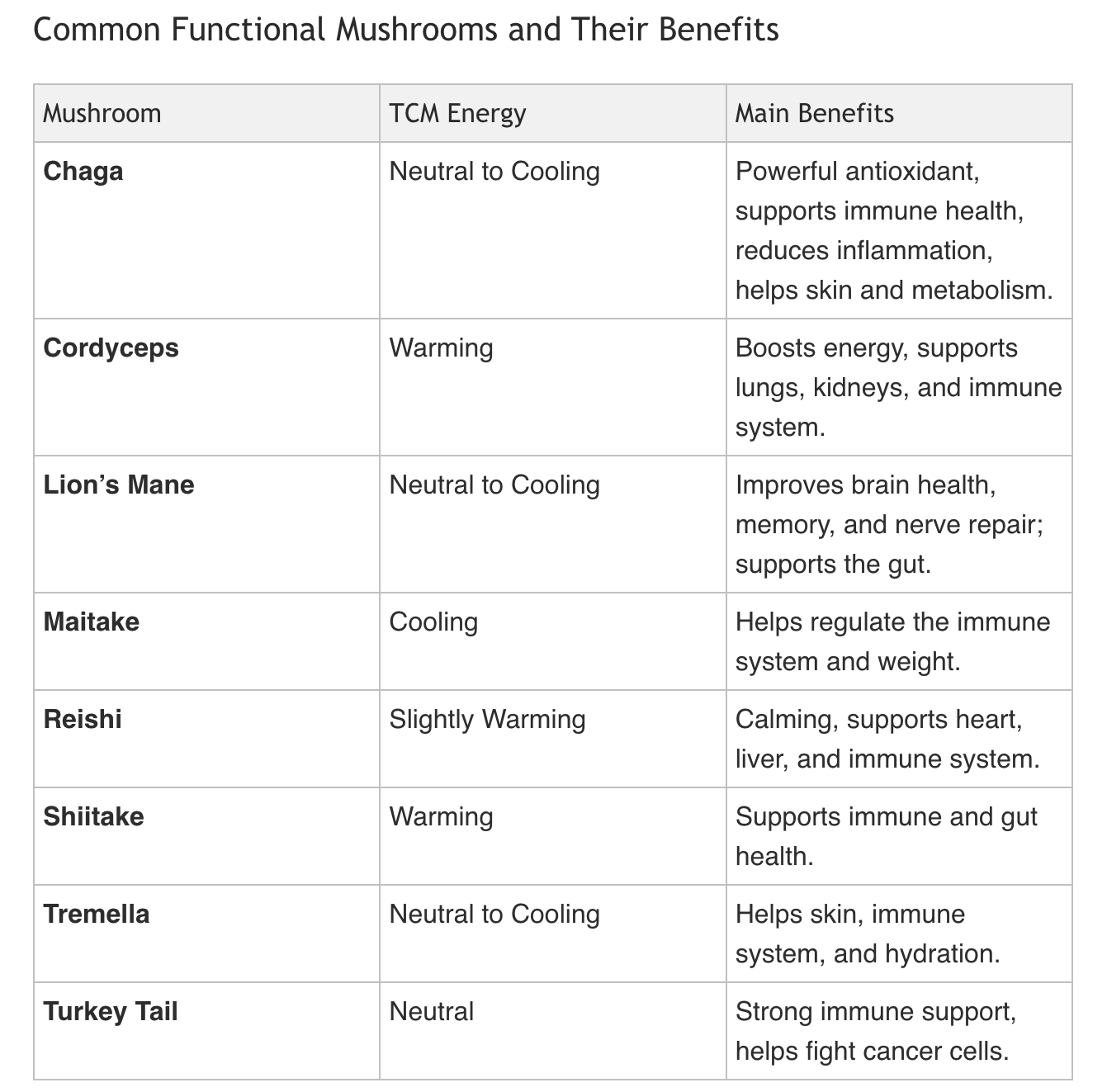
*TCM Energy Source: The Herbal Dog by Rita Hogan, C.H.
The Power of Ergothioneine
Ergothioneine (ERGO) is a special antioxidant found in certain mushrooms. Dogs (and humans) can’t make it themselves, but their bodies recognize it as important. It acts like a bodyguard, protecting cells from stress, toxins, and aging.
Benefits for dogs:
Fights cell damage from stress and aging
Supports brain, heart, and liver health
Improves energy production in cells
May help dogs live longer and stay healthier
Mushrooms highest in ergothioneine:
Oyster mushrooms
King Trumpet (King Oyster)
Shiitake
Maitake
Porcini
In Traditional Chinese Medicine, mushrooms rich in ergothioneine are considered neutral to slightly cooling, making them good for most dogs year-round — especially those with inflammation or allergies.
How Dogs Digest Functional Mushrooms
There are a few Facebook Ads allegedly by veterinarians that claim dogs can’t benefit from functional mushrooms because mushrooms contain chitin, a tough fiber found in mushroom cell walls.
But that oversimplifies how mushrooms work.
Dogs may not produce large amounts of chitinase, the enzyme that helps break chitin down, but mushrooms don’t need to be fully digested to influence the body.
The gut microbiome can ferment mushroom compounds, producing beneficial short-chain fatty acids that support gut and immune health. Beta-glucans can also interact directly with immune cells in the gut, helping support how the immune system responds.
This is why mushrooms are considered immune modulators instead of simple nutrients.
And research suggests biologic effects are happening. Studies on beta-glucans in dogs have shown changes in immune markers, gut bacteria, antioxidant activity, and inflammatory responses. Some turkey tail studies in dogs with hemangiosarcoma also showed delayed disease progression in certain groups of dogs, although results have been mixed.
Oral beta-glucans altered immune responses and antibody activity in dogs:
PMC Study: Oral β-glucan supplementation influences immune responses in dogsBeta-glucans influenced gut bacteria, fecal metabolites, antioxidant activity, and immune markers in puppies:
PLOS ONE Study: Beta-glucans modulated microbiota and antioxidant markers in dogsDietary beta-glucans influenced microbiome composition and immune variables in adult dogs:
Microorganisms Study: Beta-glucans and the canine microbiomeIn vitro research showing beta-glucans can stimulate trained immunity responses in canine immune cells:
PMC Study: Trained immunity induced by β-glucans in dogs
So yes, extraction methods may improve the availability of some compounds. But leading pet parents to believe dogs can’t absorb the nutrients in mushrooms ignores how they interact with the microbiome and immune system.
Do Dogs Need Probiotics to Gain the Benefits of Functional Mushrooms?
I couldn’t find evidence showing dogs MUST take probiotics for turkey tail mushrooms to work.
In fact, mushrooms themselves may act like prebiotics, meaning they help feed beneficial gut bacteria.
Could probiotics still help some dogs? Sure.
Especially dogs with:
digestive issues
dysbiosis
antibiotic use
chronic inflammation
But probiotics are not required for mushrooms to “activate.”
That’s marketing, not science.
Can Turkey Tail Shrink Fatty Tumors?
This is another marketing claim that has excited a lot of pet parents. Zoey has a fatty tumor on her tummy; I’ve added functional mushrooms to her meals daily and have yet to see a change.
There’s currently no strong evidence proving that turkey tail mushrooms shrink lipomas (fatty tumors), especially within a few weeks, as some brands claim.
Could inflammation changes make lumps feel softer or appear different in some dogs? Possibly.
Could some dogs experience changes while using mushrooms? Sure. I had a chat with a master herbalist in 2025 who told me that it can happen, but it takes a couple of years, not a couple of months.
But stories are not the same as controlled research.
And if someone claims their supplement shrinks tumors in 4 to 6 weeks consistently, I’d want to see actual evidence before believing it.
Should We Give Mushrooms Twice a Day
I was told that the helpful compounds in mushrooms (like beta-glucans and ergothioneine) don’t stay in the body for long because they’re water-soluble. The body uses what it needs and removes the rest.
That’s why some brands recommend giving mushrooms twice a day, once in the morning and once at night, which works better than one big serving. This keeps your dog’s immune system and energy levels balanced all day long.
But…where’s the evidence?
I did a little more research, and this is where things fall apart a bit:
Some mushroom compounds enter the bloodstream within hours
But there is very little research showing an exact “half-life.”
And definitely no solid data showing everything drops off at 10–12 hours
In fact, beta-glucans often act through the gut and immune cells, not just through blood levels, which means their effects can last longer than a blood test would suggest.
There is some logic behind splitting doses:
Smaller amounts may be easier to digest
More frequent dosing may create more consistent exposure
Although I give my dogs mushrooms twice daily, I couldn’t find any evidence supporting the claim that functional mushrooms wear off after 10-12 hours.
How to Feed Fresh Mushrooms to Dogs
Dogs can’t digest raw mushrooms easily, so cooking helps unlock the nutrients. Try:
Lightly sautéing in water or bone broth (skip butter or oil)
Baking or dehydrating for chewable treats
Simmering into broth for immune support
Possible Side Effects
Functional mushrooms are generally safe, but it’s good to know:
Too much can cause gas, bloating, or diarrhea.
Some mushrooms might interact with prescription meds.
Never feed wild mushrooms — many are toxic and can cause liver failure.
My Favorite Mushroom Supplements for Dogs
I’ve tested many brands, and these are the ones I trust the most. They all use fruiting body extracts and are transparent about their ingredients.
1. Daily Dawg by Real Mushrooms
Mushrooms: Turkey Tail, Maitake, Reishi, Shiitake, Chaga, Lion’s Mane, Cordyceps, Oyster
Great for everyday use and immune balance. Perfect for healthy adult and senior dogs.
Best for: Overall wellness and antioxidant protection.
2. Five Defenders by Real Mushrooms
Mushrooms: Turkey Tail, Maitake, Reishi, Shiitake, Chaga
Supports immune strength and recovery after illness.
Best for: Senior or immunocompromised dogs.
3. Woof Creek Wellness
Woof Creek Wellness offers targeted supplements. I use the following with my dogs:
4. Focus + Immune by Earth Buddy Pet
Mushrooms: Agarikon, Cordyceps, Lion’s Mane, Reishi, Turkey Tail
Boosts energy, focus, and brain function.
Best for: Active or senior dogs needing mental clarity.
5. Clarity by MycoDog
Mushrooms: Lion’s Mane, Reishi, Cordyceps
Supports brain health and calm behavior.
Best for: Senior dogs and those needing focus or nerve support.
My Routine
I rotate mushroom blends based on my dogs’ needs (and what I’m feeding):
Daily Dawg for everyday maintenance
Earth Buddy & Woof Creek formulas during allergy season or stressful times
MycoDog, when I’m feeding a whole prey raw meal, because it’s easier to use a tincture when there isn’t ground dog food to mix powders into.
I always give mushrooms twice daily with meals for the best results, although there’s no scientific evidence that this is necessary.